|
Step 4: You will need approximately 30 times the amount of
liquid as the weight of your yarn. At this stage your water
should be at room temperature.
Using metric measurements comes in handy at this stage because
one litre of water weighs 1 kilogram, so for every 100gm of
yarn you will need 3 litres of liquid.
Measure out your liquid (including your dye) and pour it into
your dyepot. Stir the dye through the water thoroughly. (Note:
You should keep all of your dye pots etc for dyeing only).
Gently squeeze the excess water out of your yarn and lower
it into the dyepot. Swirl it through the dye to make sure all
of the yarn has soaked up at least a small amount of colour.
The dye won't have penetrated the yarn yet, you just want to
make sure that all of the yarn has come into contact with it.
Step 5: Turn on the heat and bring the temperature up to a
slight boil, just past a simmer. You don't want a rolling boil
unless you want to felt your yarn.
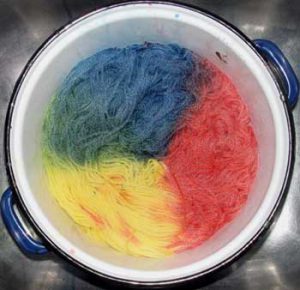
Whilst the temperature is increasing, gently stir your yarn
through the dye, very slowly. Turn it occasionally if some of
the skein sits above the liquid as mine does in the photograph
on the left.
Step 6: When your yarn has drawn up enough of the dye for the
colour you want, turn off the heat and let the dyepot cool down.
Rinse your yarn in water that is the same temperature as your
yarn with a little laundry detergent added. The laundry detergent
will assist in removing any excess dye.
Rinse in clear water the same temperature as your yarn. Repeat
until the water remains clear. If your yarn feels a little stiff
you can add some hair conditioner to the final rinse.
Step 7: Spin the excess water out of your yarn using your washing
machine, or if you need to do it by hand, squeeze the excess
water out, roll in a towel and press firmly.
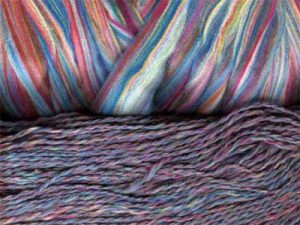
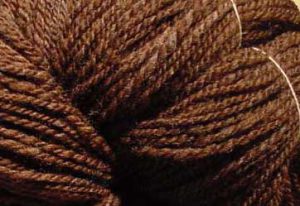
Dry the skeins according to your preference (you may want to
block singles or novelty yarns for example). I just laid mine
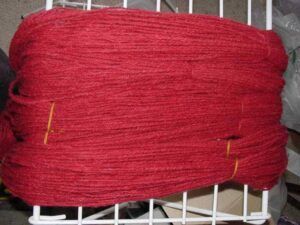
flat to dry over the rack shown in the photo of the finished
yarn.
|